Quick answer
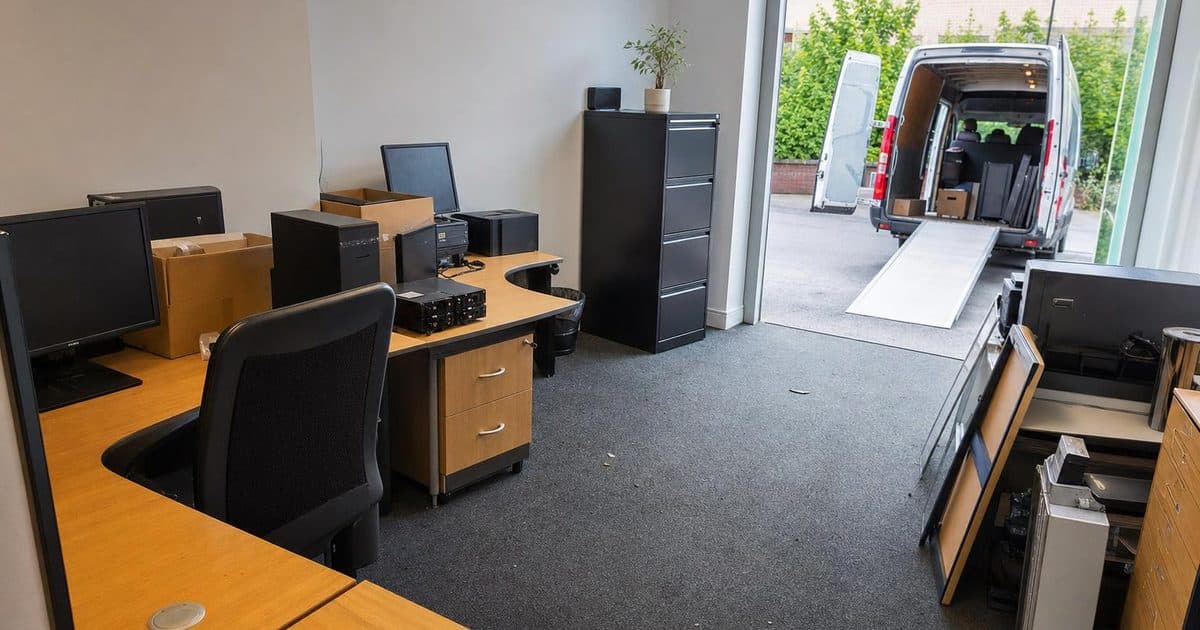
Separate reusable furniture, confidential paperwork, IT equipment and general waste first. Make sure your clearance provider can handle access, parking and disposal responsibly.
Why a clear plan matters
When an office move is approaching, it is easy for cupboards, storage rooms and shared spaces to fill up with items that no one has time to sort. A simple plan makes the whole process calmer and helps you avoid last-minute decisions on moving day.
For Lancaster businesses, this is especially useful if you are working around a tight handover date, shared building access or limited parking. The more you can separate in advance, the easier it is to arrange an office clearance that fits the space and the schedule.
Sort items before you book
Before asking for a quote, walk through the office and divide everything into clear groups. This gives you a better idea of what needs moving, what can be reused and what should be taken away for disposal.
Reusable furniture and fixtures
Desks, meeting tables, chairs, storage units and reception furniture are often the easiest items to sort. Decide whether any of them will be used in the new premises, passed on to another branch or removed as part of the clearance.
If you are clearing out larger items that are no longer needed, services such as Furniture Removal can help with heavier pieces that are awkward to move safely.
Waste and unwanted items
Anything broken, outdated or no longer suitable for the new workplace should be set aside separately. That might include damaged chairs, obsolete display stands, old shelving, packaging and general rubbish from storage areas.
- Clear one room or zone at a time.
- Label boxes and bags clearly.
- Keep reusable items away from general waste.
- Set aside anything that needs special handling.
Check access, parking and building rules
Office clearances run more smoothly when the clearance team knows exactly how to reach the building. In Lancaster, that may mean working around pedestrian areas, shared car parks, loading bays or restricted access times.
It helps to note the floor number, lift access, stair width, nearby parking options and any building rules for contractors. If the office is in a busy commercial area, small details like lift booking times can make a big difference.
Point of contact on the day
Choose one person who can answer questions on site and confirm what should be removed. This avoids confusion if staff are packing at the same time as the clearance is taking place.
If access is tight or the job involves multiple locations, a provider that also handles Commercial Waste Removal may be useful for the extra waste that builds up during a move.
Plan for paperwork and IT
Paper records and IT equipment need a little extra care because they often contain sensitive information or valuable parts. Sorting these items early helps you protect data and avoid mixing them in with general waste.
Confidential paperwork
Go through filing cabinets, drawers, archive boxes and storage cupboards. Separate anything that should be kept, digitised or securely destroyed. Do not leave confidential paperwork mixed in with plain office waste if you want the clearance to move quickly.
IT and electrical items
Laptops, monitors, printers, docking stations, cables and small electrical items should be gathered together so they can be assessed properly. If equipment is being replaced or removed, E Waste Disposal is often the most suitable route for items that should not go in with standard rubbish.
| Item type | Best way to prepare |
|---|---|
| Desks and chairs | Clear drawers and remove personal items before collection |
| Paper records | Separate confidential files from general paperwork |
| Computers and screens | Group together and keep leads, chargers and accessories with them |
| General waste | Bag separately so it can be removed efficiently |
Prepare the office on the day
On clearance day, the aim is to make access simple and keep the team moving. A few small preparations can save time and reduce disruption for the rest of the business.
- Keep corridors and stairs clear.
- Move personal belongings out of the way.
- Label items that are staying and items that are going.
- Make sure keys, fobs and access codes are ready if needed.
- Park vehicles so loading space is left free.
If your office includes storage areas, kitchens or basements, check those spaces too. These are often where the forgotten items end up, and they can add a surprising amount to the job.
What happens after the clearance
Once the clearance is complete, do a final walk-through of the premises. Check cupboards, drawers, side rooms, roof spaces and shared areas so nothing important has been missed.
If you are handing the property back to a landlord or preparing for refurbishment, it can also help to remove any remaining loose items and sweep through the space. For larger strip-outs or more complex jobs, related services such as Commercial Waste Removal or Office Clearance can be arranged to suit the site.
Keeping a simple checklist makes future moves easier too. It helps your team see what was removed, what was reused and what still needs attention before the next stage of the project.